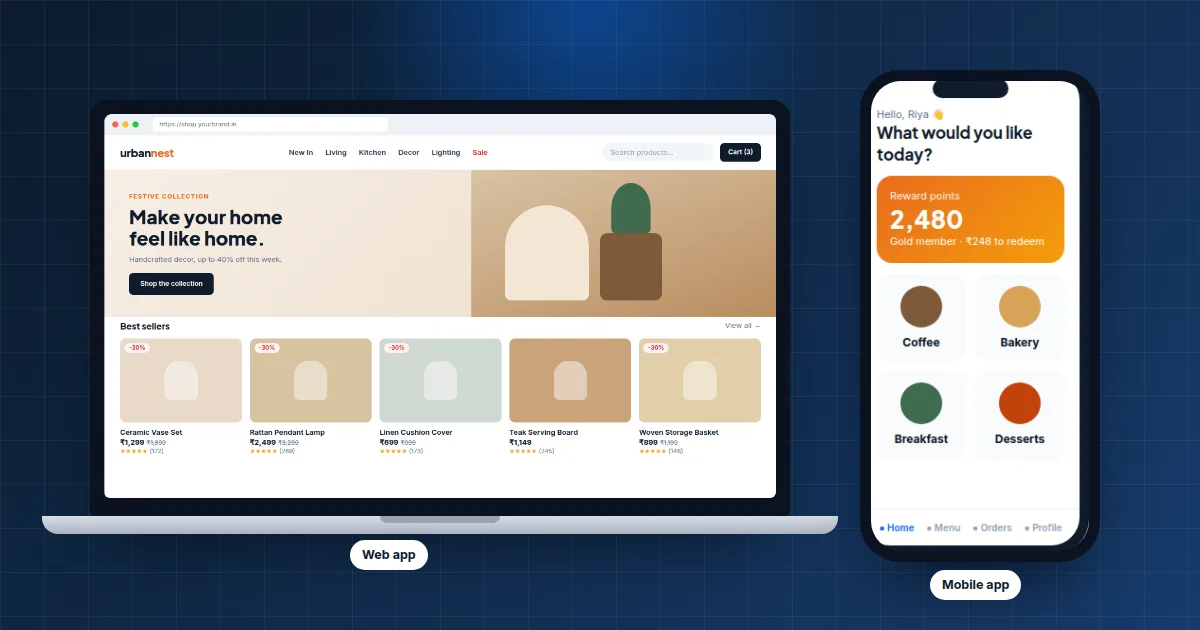
One of the first decisions in any new digital product is where it should live: in the browser, on users' phones, or both. The right answer depends on your users, your budget and what the product needs to do.
When a web app is the better first step
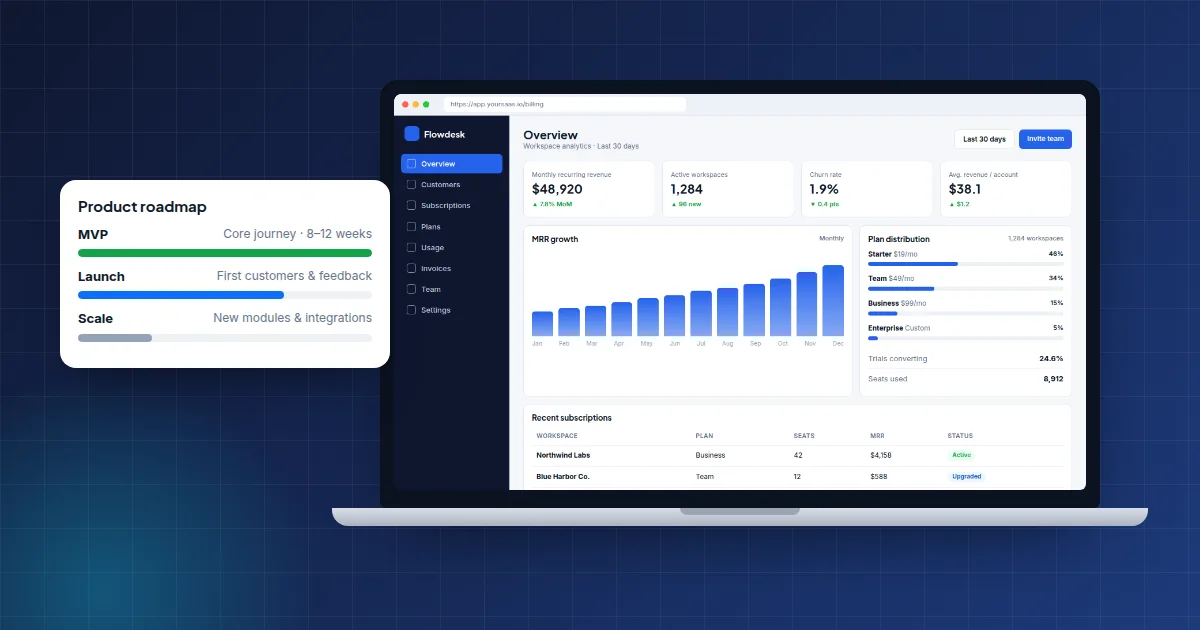
- Your users work on desktops — internal tools, dashboards, ERPs and B2B portals are mostly used on laptops.
- You need to launch quickly — one responsive web app works on every device without app store reviews.
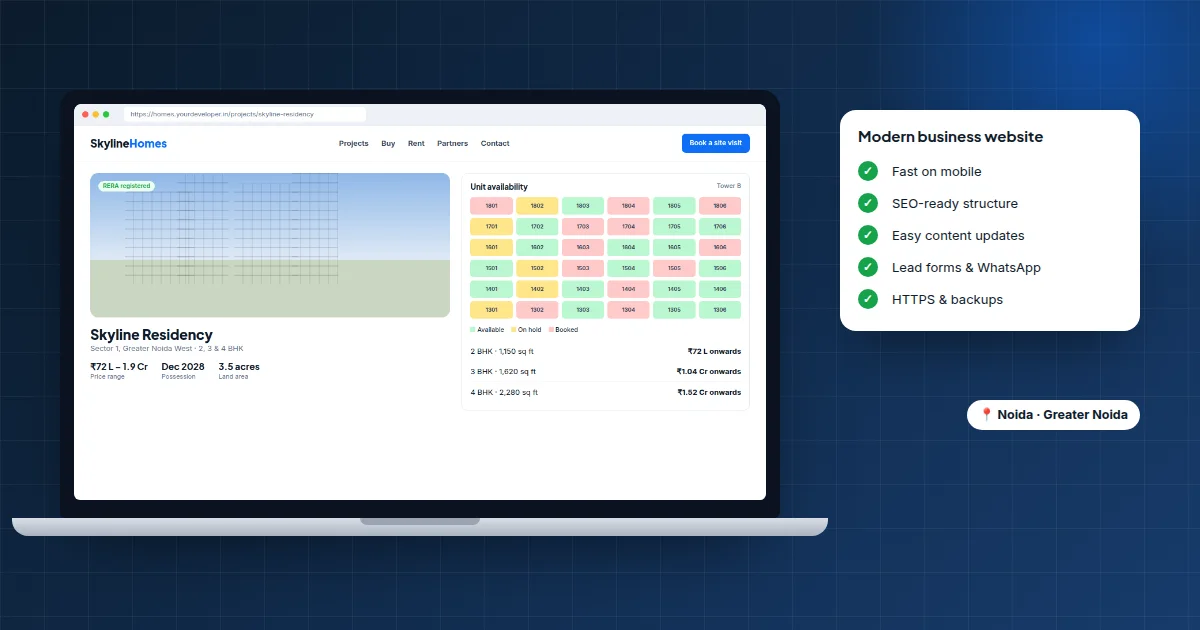
- Discoverability matters — web pages can be found through search engines and shared with a link.
- You expect frequent changes — updates go live instantly for everyone.
When a mobile app is worth it
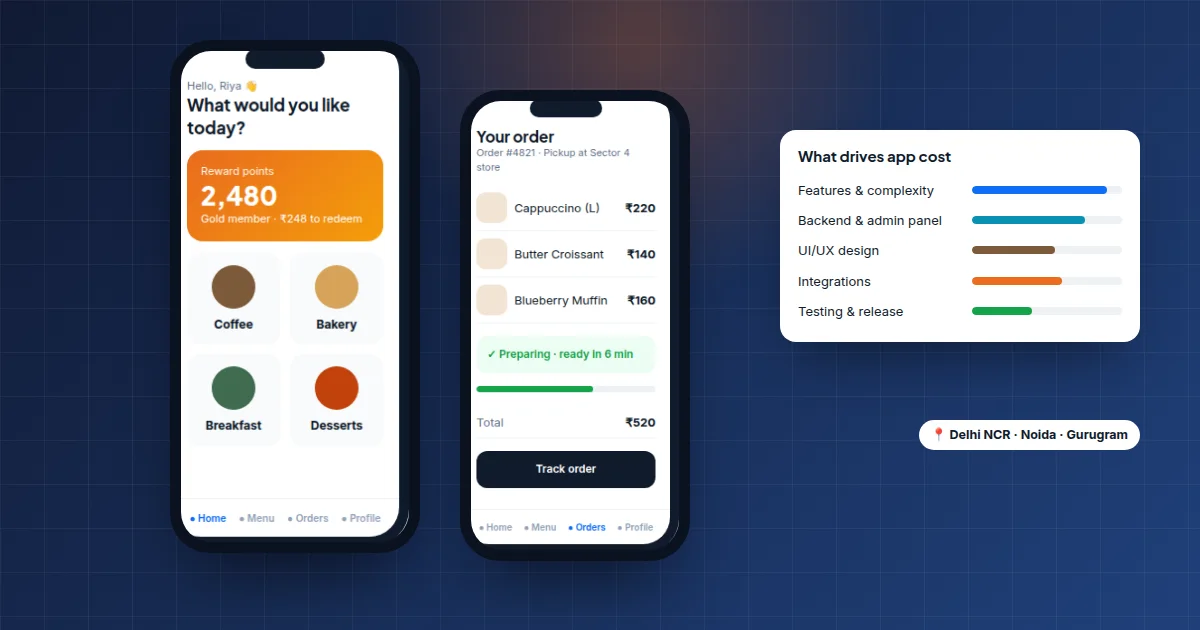
- Daily or frequent use — ordering, loyalty, booking and delivery apps benefit from being one tap away.
- Device features — camera, GPS, offline mode, biometrics and background location work best in native apps.
- Push notifications are central to engagement.
- Field teams need to work in places with poor connectivity.
Cost and timeline
A responsive web app is usually the fastest and most economical way to validate a product. Cross-platform frameworks such as Flutter and React Native have made mobile development far more efficient by sharing one codebase across Android and iOS, but they still add design, testing and store-release effort.
The approach that often works best
Many successful products follow a simple path:
- Build a solid backend and API that can serve any front end.
- Launch a responsive web app (and admin panel) to validate the product.
- Add a mobile app for the users and journeys that clearly benefit from it.
Because the backend is shared, adding the mobile app later does not mean starting again.
Questions to ask before deciding
- Where and how often will users use the product?
- Does it need device features such as camera, GPS or offline access?
- How important are notifications to the experience?
- What is the budget and launch deadline?
Conclusion
There is no universal winner. Start where your users are, keep the backend reusable, and expand to other platforms once the core product proves its value.
How Omprem Infotech can help
We build web apps, mobile apps and the shared backend that powers both.
- Web Development — responsive web applications and portals
- Mobile App Development — Android and iOS apps with Flutter and native tools
- UI/UX Design — journeys that users understand instantly
Based in Greater Noida West, we work with businesses across Noida, Delhi NCR and India. Tell us what you are building and we will suggest a practical approach and estimate.